


Aboriginal Early Childhood Strategy
Cultural Sensitivity Warning
Aboriginal and Torres Strait Islander people should be aware that this website may contain images, voices or names of deceased persons in photographs, film, audio recordings or printed material.
Please note: Throughout this website, the term 'Aboriginal' respectfully refers to both Aboriginal and Torres Strait Islander peoples. We respect the preference to use this term in written and spoken language to acknowledge all First Peoples of Australia. We also acknowledge that Torres Strait Islander peoples may refer to themselves as Zenadth Kes.
On this page, words including Country, Elder, Community and Culture are capitalised when used in the context of Aboriginal and Torres Strait Islander peoples, to reflect their Cultural significance.
Acknowledgement of Country
Skip to descriptionWe acknowledge the Aboriginal peoples as the First peoples of South Australia and as custodians of the lands, waters, skies and Communities where we live, learn and raise children.
We recognise Aboriginal peoples as having the longest living Culture, raising children safe and strong in their identity, Community, Culture, and connection to Country.
We pay our deep respects to Elders past and present, and their role as the first knowledge sharers for children. We follow in their footsteps.
Aboriginal peoples, working with and for children, are central in shaping our work. Their wisdom, advice, and guidance enriches our practices, creating a more inclusive and Culturally safe environment for children and families.
We respect Aboriginal peoples’ ways of being, doing and wise practices guiding our continual learning. Together we walk and build stronger, more supportive Communities for all children.
We invite you to watch and listen to our Acknowledgement of Country, developed in collaboration with our Aboriginal Leadership Committee. These words honour the wisdom and guidance that enriches our work with children, families and Communities.
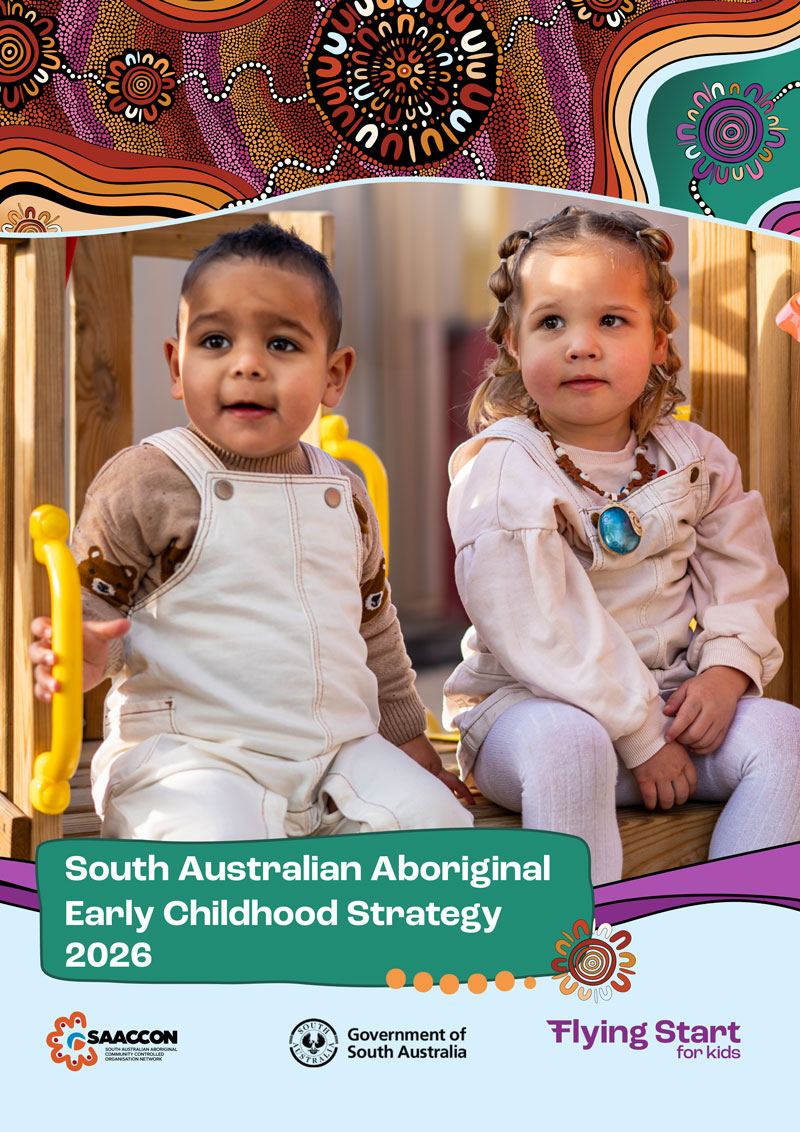
The Aboriginal Early Childhood Strategy 2026
Developed with Aboriginal leadership and Community at its centre, the Aboriginal Early Childhood Strategy strengthens how we engage Aboriginal children, families and Communities in early childhood education and services.
Aboriginal children thrive when connected to their Culture, identity and Community
It takes shared decision-making and co-design with Aboriginal leadership and Community to better support Aboriginal children and their families. The Office for Early Childhood Development (OECD) recognises the role of family as children’s First Teachers, decision-makers and partners, and respects the unique value of Aboriginal and Torres Strait Islander child-raising practices.
We understand this requires deeply listening to, and meaningfully engaging with families, local Aboriginal Communities, the Aboriginal Community Controlled Organisation and Aboriginal Community Controlled Health Organisation sector and Elders.
Working together for Aboriginal children
We work in partnership with Aboriginal leadership and Communities, supported by an Aboriginal Co-design Governance Group (ACGG). In partnership with the Office for Early Childhood Development, the ACGG was co-chaired by the South Australian Community Controlled Organisation Network for the first two years; this ACCO peak representation transitioned to the South Australian Aboriginal Education Training Consultative Council in 1 July 2026.
The ACGG has equal government and non-government membership, with majority Aboriginal representation, including Aboriginal-led peak bodies, preschool and early childhood services, Community Elders and government agencies.
The ACGG exists to uphold and advance the principles of co-design in early childhood policy and practice. Its primary purpose is to ensure that Aboriginal voices, Cultural authority and lived experience shape the development and implementation of initiatives that impact Aboriginal children, families and Communities.
Closing the Gap
The South Australian Aboriginal Early Childhood Strategy is grounded in the National Agreement on Closing the Gap, as the overarching framework for shared accountability, outcomes and reform between governments and Aboriginal and Torres Strait Islander peoples.
By embedding Aboriginal priorities at every stage of reform, the Strategy keeps Closing the Gap at the centre, ensuring Aboriginal children are supported to thrive, connected with Culture, identity and belonging, and able to learn with strength, pride and agency.
In particular, the Aboriginal Early Childhood Strategy aligns with:
- Outcome 3: Children are engaged in high quality, Culturally appropriate early childhood education in their early years and supporting Target 3: By 2025, increase the proportion of Aboriginal and Torres Strait Islander children enrolled in Year Before Fulltime Schooling (YBFS) early childhood education to 95%.
- Outcome 4: Children thrive in their early years and supporting Target 4: By 2031, increase the proportion of Aboriginal and Torres Strait Islander children assessed as developmentally on track in all 5 domains of the Australian Early Development Census (AEDC) to 55%.
South Australia Early Childhood Care and Development Policy Partnership (ECCDPP)
The ECCDPP enables Aboriginal and Torres Strait Islander peoples to work in genuine partnership with governments to drive Community-led, early childhood care and development outcomes.
The Office for Early Childhood Development is a member of the ECCDPP and contributes to and incorporates learnings into design, focusing on Aboriginal-led implementation, strengthening integrated services, workforce capability and authentic local engagement, and enabling children to thrive in Culturally responsive and safe, well-connected environments.
Aboriginal Early Childhood Strategy fact sheets and related reports
South Australian Aboriginal Early Childhood Co-Design Project
The Office for Early Childhood Development engaged MTL Consulting Services and Kimberley Wanganeen Consultancy - operating as a consortium - to lead two connected co-design projects as part of South Australia's Flying Start reform. Both reports were developed through engagement spanning all six South Australian First Nations Voice to Parliament regions, and together directly inform OECD's work to strengthen Aboriginal children's early childhood experiences.
Workforce Report - May 2025
The Workforce Report (May 2025) was commissioned to address Recommendation 22 of the Royal Commission into Early Childhood Education and Care, and specifically informed the development of the Aboriginal Early Childhood Workforce Strategy and its underpinning initiatives.
Download Workforce Report - May 2025 (PDF)
3-year-old Preschool Report - August 2025
The 3-Year-Old Preschool Report (August 2025) gathered stakeholder insights on improving access to and participation in 3-year-old preschool for Aboriginal children, and on what Culturally safe, Community-driven early childhood education looks like in practice.
Fact sheets
Have a question?
Email us at OECD.Engage@sa.gov.au