


Introduction
Download a PDF copy of the Aboriginal Early Childhood Strategy 2026
Acknowledgement of Country
From the heart
We acknowledge the Aboriginal peoples as the First peoples of South Australia and as custodians of the lands, waters, skies and Communities where we live, learn and raise children.
We recognise Aboriginal peoples as having the longest living Culture, raising children safe and strong in their identity, Community, Culture, and connection to Country.
We pay our deep respects to Elders past and present, and their role as the first knowledge sharers for children. We follow in their footsteps.
Aboriginal peoples, working with and for children, are central in shaping our work. Their wisdom, advice, and guidance enriches our practices, creating a more inclusive and Culturally safe environment for children and families.
We respect Aboriginal peoples’ ways of being, doing and wise practices guiding our continual learning. Together we walk and build stronger, more supportive Communities for all children.
Terminology
Throughout this document, the term ‘Aboriginal’ respectfully refers to both Aboriginal and Torres Strait Islander peoples. We respect the preference to use the term ‘Aboriginal’ to acknowledge in written and spoken language both Aboriginal and Torres Strait Islander peoples. We also acknowledge that Torres Strait Islanders may refer to themselves as Zenadth Kes, which is an amalgamation of Torres Strait language names for the 4 winds that pass through the region.
The term ‘Indigenous Data Sovereignty’ is utilised in line with the Australian Government Framework for Governance of Indigenous Data.
The use of the term ‘families’ throughout this document respectfully refers to a conception of family that is inclusive of kinship carers, caregivers and extended family members.
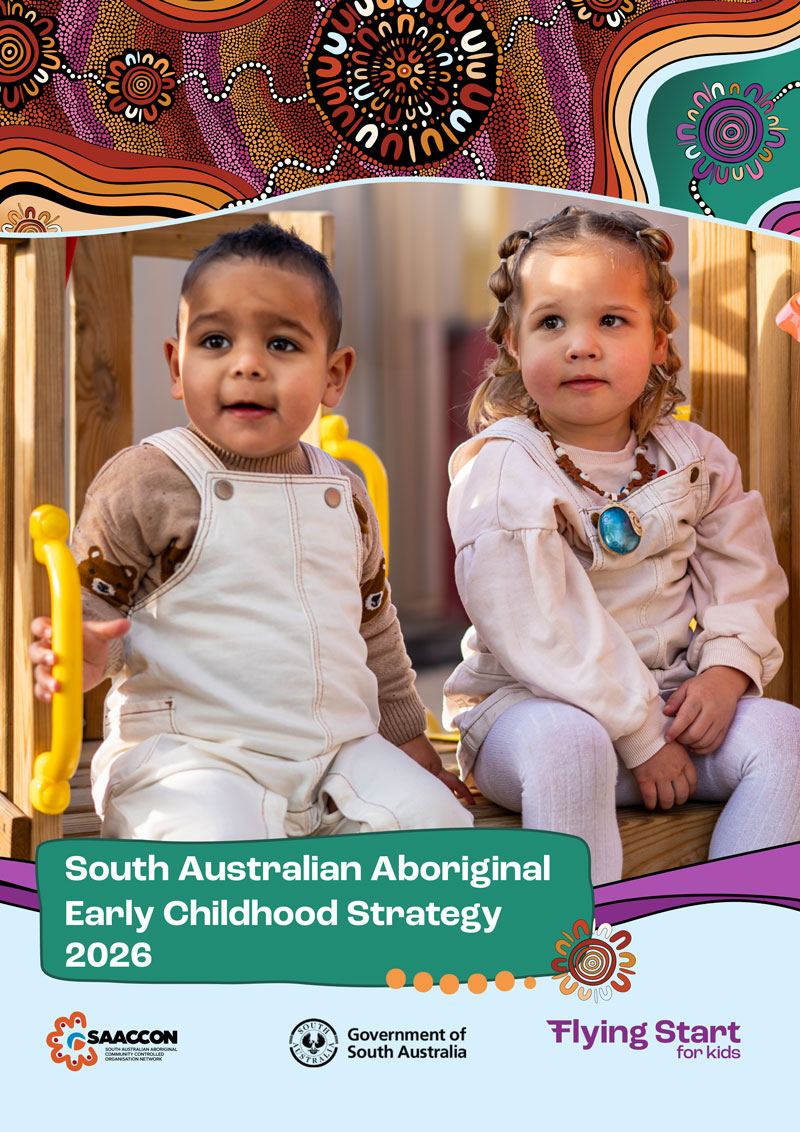
Cover credit
Phillip Jackson Jnr and Ochre Dixon (Uncle and Niece) are pictured together playing, learning, and growing on Kaurna Country at Kura Yerlo Children’s Centre.
Phillip’s cultural groups are Kokatha, Mirning, Adnyamathanha and Ngarrindjeri. Ochre’s cultural groups are Kaurna, Narungga, Wirangu, Kokatha and Mirning.
Thank you to Kaurna and Ngarrindjeri photographer Shemeike Watkins for our cover photo, which is published with permission from the families and Kura Yerlo Children’s Centre.
Contributors and thank you
The Strategy is built on the strong voices and insights of Community members across South Australia.
In addition to the many individual Community members involved in the development of the Strategy, the Office for Early Childhood Development (OECD) and the South Australian Aboriginal Community Controlled Organisation Network (SAACCON) would particularly like to thank the members of the Aboriginal Co-design Governance Group (ACGG) and the following contributors to the co-design process:
- the early childhood education and care (ECEC) sector and Aboriginal Community members connected to and supporting their local preschools and long day care services
- MTL Consulting Services in partnership with Kimberley Wanganeen Consultancy for leading the co-design engagements
- the Aboriginal Leadership Committee within the OECD
- Elders and families as children’s First Teachers; and
- the Aboriginal and Torres Strait Islander teachers and educators that paved the way for this Strategy.
Your knowledge, experiences and insights were heard, felt and valued. Your wisdom, advice, and guidance enrich our practices, creating a more inclusive and Culturally responsive environment for children and families.